
01 · Clinical impact
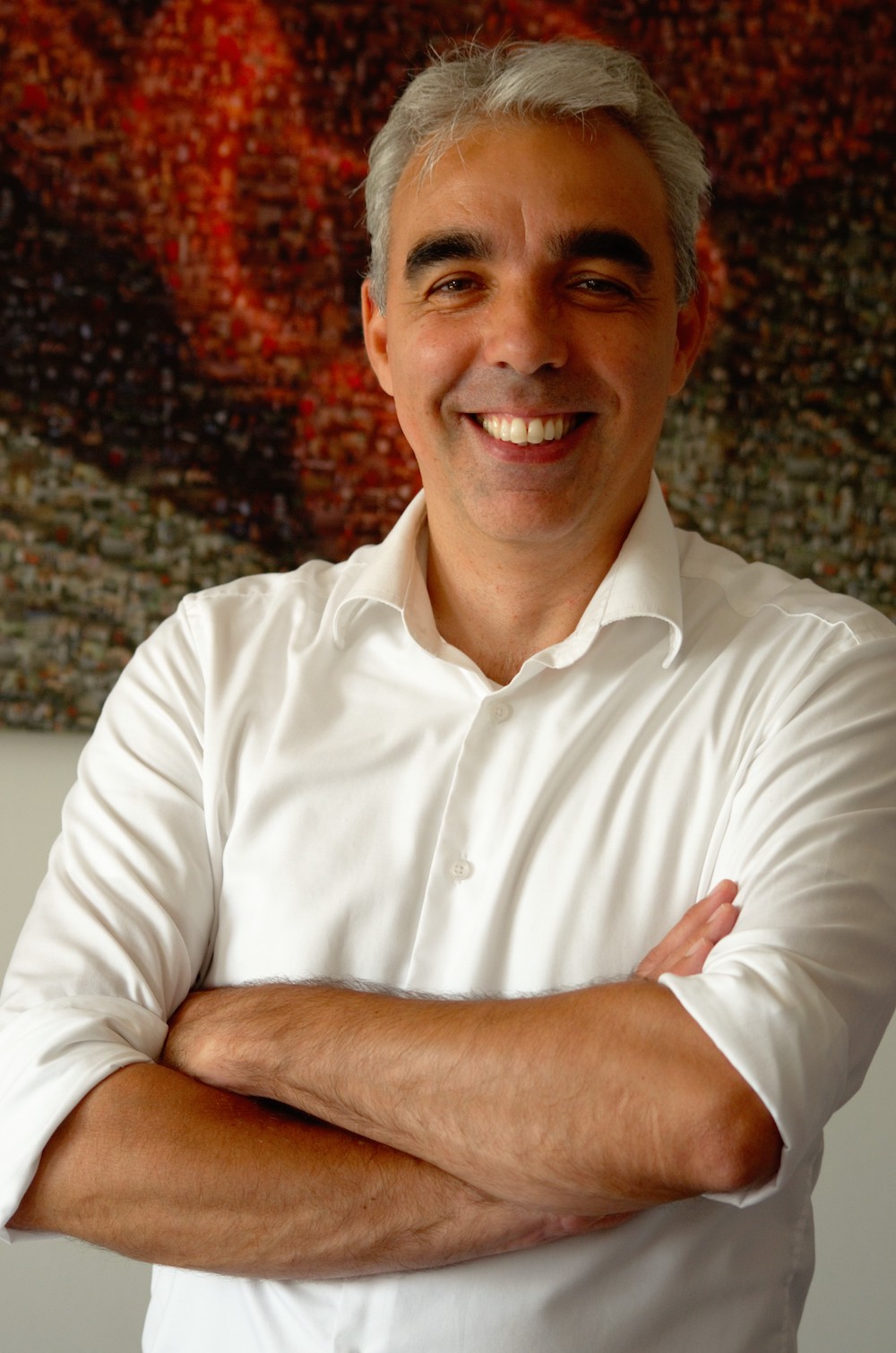
Prof. Sabine Fuchs
Professor of Metabolic Diseases and Innovative Therapies, UMC Utrecht
Work package leader on Clinical Trial, NANOSPRESSO-NL
How can nanomedicine really change patients’ lives?

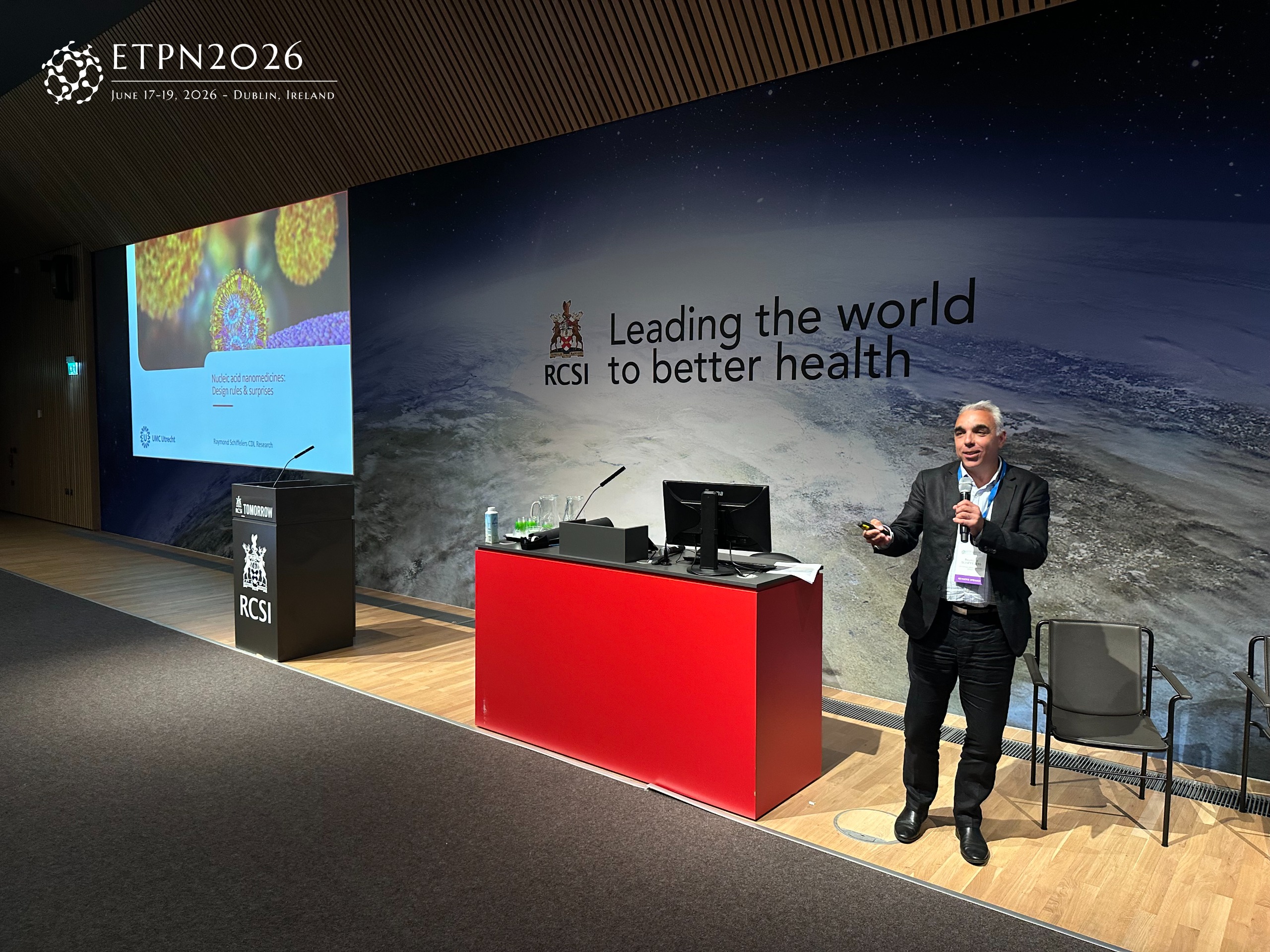
NANOSPRESSO had a major presence at ETPN2026 (etpn2026.eu/), the 21st Annual Event of the European Technology Platform on Nanomedicine, hosted by the Royal College of Surgeons in Ireland in Dublin from 17 to 19 June 2026. Throughout the second day, the project helped drive a strategic discussion on how personalised RNA/LNP medicines can move from a strong technical concept towards patients.
The discussion followed a clear path: start from a real unmet clinical need, build regulatory intelligence and trust from scratch, and test your manufacturing strategy against scientific and operational reality. This is why NANOSPRESSO is relevant for the wider ETPN community. The project does not present personalised nucleic acid nanomedicine as a simple technical fix. It asks what must be in place for such a model to become useful, trusted and usable in real care.
AT ETPN2026, we shared three concrete perspectives from the NANOSPRESSO-NL consortium: Prof. Sabine Fuchs on clinical need, Olivia Lewis on regulatory science, and Prof. Raymond Schiffelers on RNA/LNP scale-down. Together, their contributions show why the future of personalised nanomedicine depends on asking simple but demanding questions: who needs it, can it be trusted, and what does it really take to bring it closer to patients?
01 · Clinical impact
Professor of Metabolic Diseases and Innovative Therapies, UMC Utrecht
Work package leader on Clinical Trial, NANOSPRESSO-NL
How can nanomedicine really change patients’ lives?

02 · Regulatory science
Early Stage Researcher in Drug Regulatory Science, Utrecht University
NANOSPRESSO-NL regulatory science
Can the process be trusted as much as the final product?
03 · RNA/LNP science
Professor of Nanomedicine, UMC Utrecht
Concept lead and coordinator, NANOSPRESSO-NL
Why not scale down RNA/LNP manufacturing?
The second day of ETPN2026 opened with the most important question for the nanomedicine community: what do patients and clinicians actually need?
This was the purpose of the Clinical Needs and Unmet Clinical Needs in Nanomedicine panel, hosted by Marco Monopoli at RCSI and moderated by Alexandre Ceccaldi. The discussion brought together clinical perspectives from oncology, haematology, cardiology, regenerative medicine and rare metabolic diseases, creating a direct dialogue between medical needs and the European nanomedicine community.
Prof. Sabine A. Fuchs, Professor of Metabolic Diseases and Innovative Therapies at UMC Utrecht / Wilhelmina Children’s Hospital and Work Package leader on Clinical Trial in NANOSPRESSO-NL, contributed a key perspective on rare genetic and metabolic diseases, where patient populations are small, therapeutic options remain limited, and the path from promising technology to clinical benefit is particularly demanding.
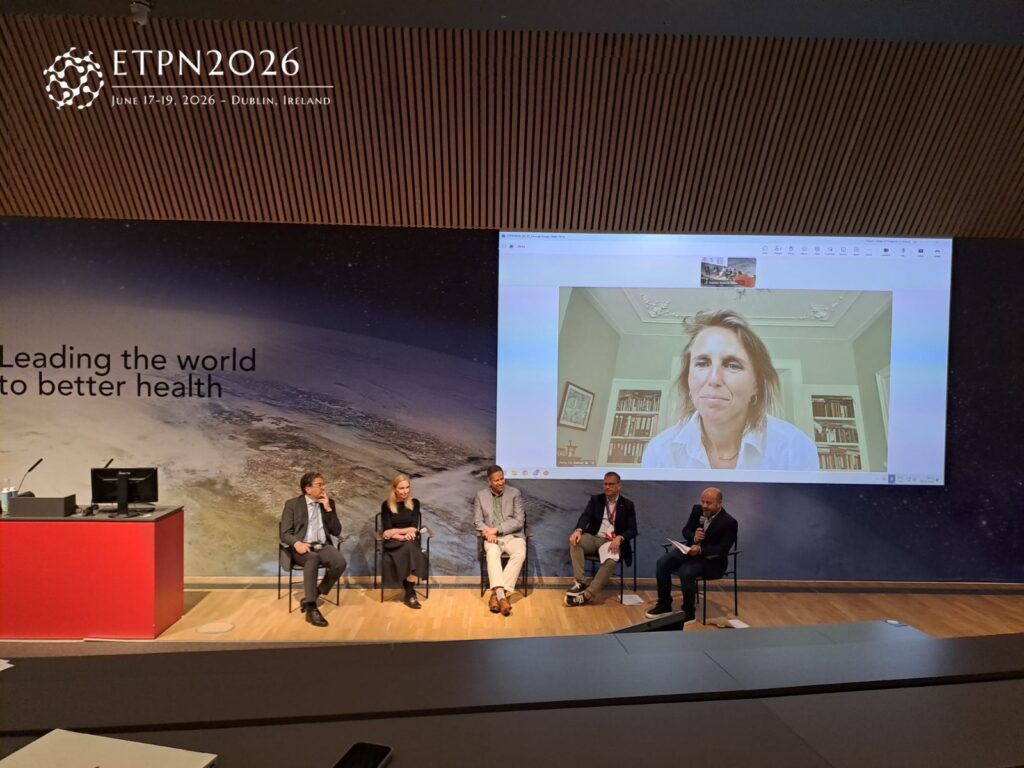
Her contribution helped connect the ambitions of NANOSPRESSO-NL with the broader translational spirit of ETPN2026: developing advanced nanomedicines, including locally prepared personalised nucleic acid therapeutics, with a clear understanding of patient needs, clinical workflows, safety, efficacy and future trial readiness.
Prof. Fuchs spoke from the clinical reality of children with rare metabolic diseases and their families. Diagnosis has improved, especially through genomic technologies. But for many rare diseases, the main problem remains the same: patients still lack treatments that can change the course of disease.
his is the starting point for NANOSPRESSO-NL. The project is not only about locally producing RNA/LNP medicines. It is about whether local production could help address diseases where conventional development models struggle, especially for very small patient populations.
For Prof. Fuchs, the clinical filter is simple: a new technology only matters if it can help the patient.
That point matters. Microfluidics, lipid nanoparticles, regulatory science and hospital-based production only become meaningful if they support a treatment path that clinicians can use and patients can trust.
Prof. Fuchs also gave a grounded view of patient acceptance. For parents and families facing severe disease, the context changes everything. When no treatment, or only limited treatment options, are available, the first question is rarely about the technology itself. It is whether a credible treatment can become available for their child.
For NANOSPRESSO, this is where the story begins: with unmet need, not with the machine.
Olivia Lewis, PhD candidate in Drug Regulatory Science at Utrecht University and member of the NANOSPRESSO-NL consortium, opened the ETPN2026 session dedicated to scale-up, manufacturing, regulation and translational complexity as invited speaker. Her role was not to add a regulatory note at the end of the project, but to place regulation where NANOSPRESSO needs it: inside the research question.
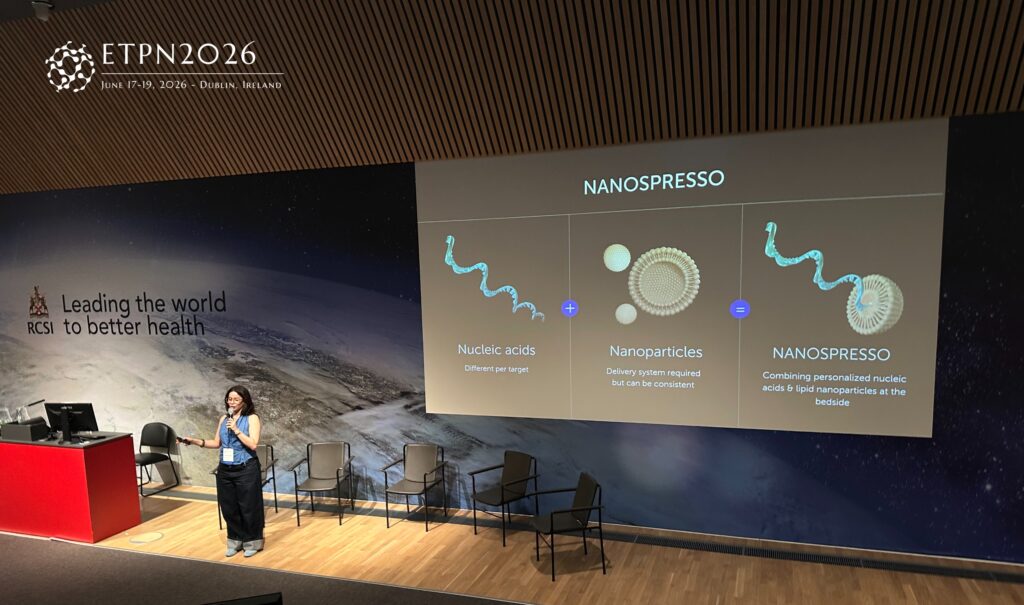
Her talk, “The Silent Carrier? Regulatory Recognition and Management of Lipid Nanoparticle-Associated Risks in EU-Authorised Medicinal Products”, addressed a central issue for RNA/LNP medicines. Lipid nanoparticles are often described as carriers, but they influence delivery, biodistribution, efficacy and safety. If the carrier shapes how the medicine behaves, it cannot remain scientifically or regulatorily invisible.
For NANOSPRESSO, this question is essential. The project explores whether personalised nucleic acid medicines could be prepared locally, closer to the patient, using a controlled RNA/LNP production process. Such a model cannot rely only on product-by-product thinking. It needs a platform logic: the therapeutic payload may change, but the process, quality controls and regulatory framework must remain robust, reproducible and understandable.
This is why regulatory science is not a side issue for NANOSPRESSO. A hospital-based RNA/LNP production model will only be credible if regulators, pharmacists, clinicians and hospitals can understand what remains constant, what changes from one patient or disease to another, and how quality is demonstrated when the final medicine is personalised.
The key point is not that the regulatory pathway is already solved. It is that NANOSPRESSO is asking the right question early: how can a personalised production platform become readable, reproducible and trusted? In the discussion following her talk, Olivia Lewis summarised the practical expectation behind platform thinking: developers will need to demonstrate reproducibility at process level.
Her contribution showed why future RNA/LNP nanomedicines will need more than formulation performance. They will need carrier visibility, process control, explicit quality attributes and a regulatory language capable of supporting personalised production. For NANOSPRESSO, this is part of the design of the project itself.
Prof. Raymond Schiffelers, Professor of Nanomedicine at UMC Utrecht, Vice President Preclinical R&D at NanoCell Tx, concept lead and coordinator of NANOSPRESSO-NL, closed the day with the keynote lecture “Nucleic acid nanomedicines: design rules and surprises”.
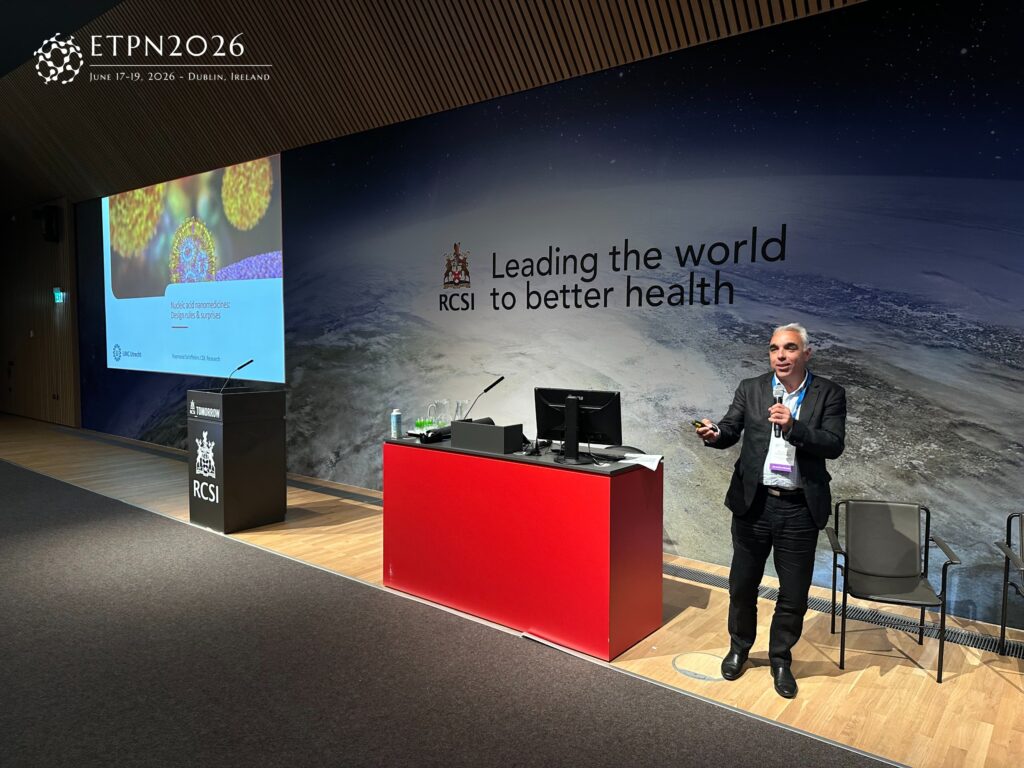
He recalled the core NANOSPRESSO question when it comes to RNA/LNP manufacturing:
This is the shift behind NANOSPRESSO. Much of pharmaceutical development is built around scale-up: producing larger batches, centralising manufacturing and distributing products widely. NANOSPRESSO asks a different question. For rare diseases and personalised therapies, could it make more sense to prepare a small, controlled, patient-specific treatment closer to the clinical setting?
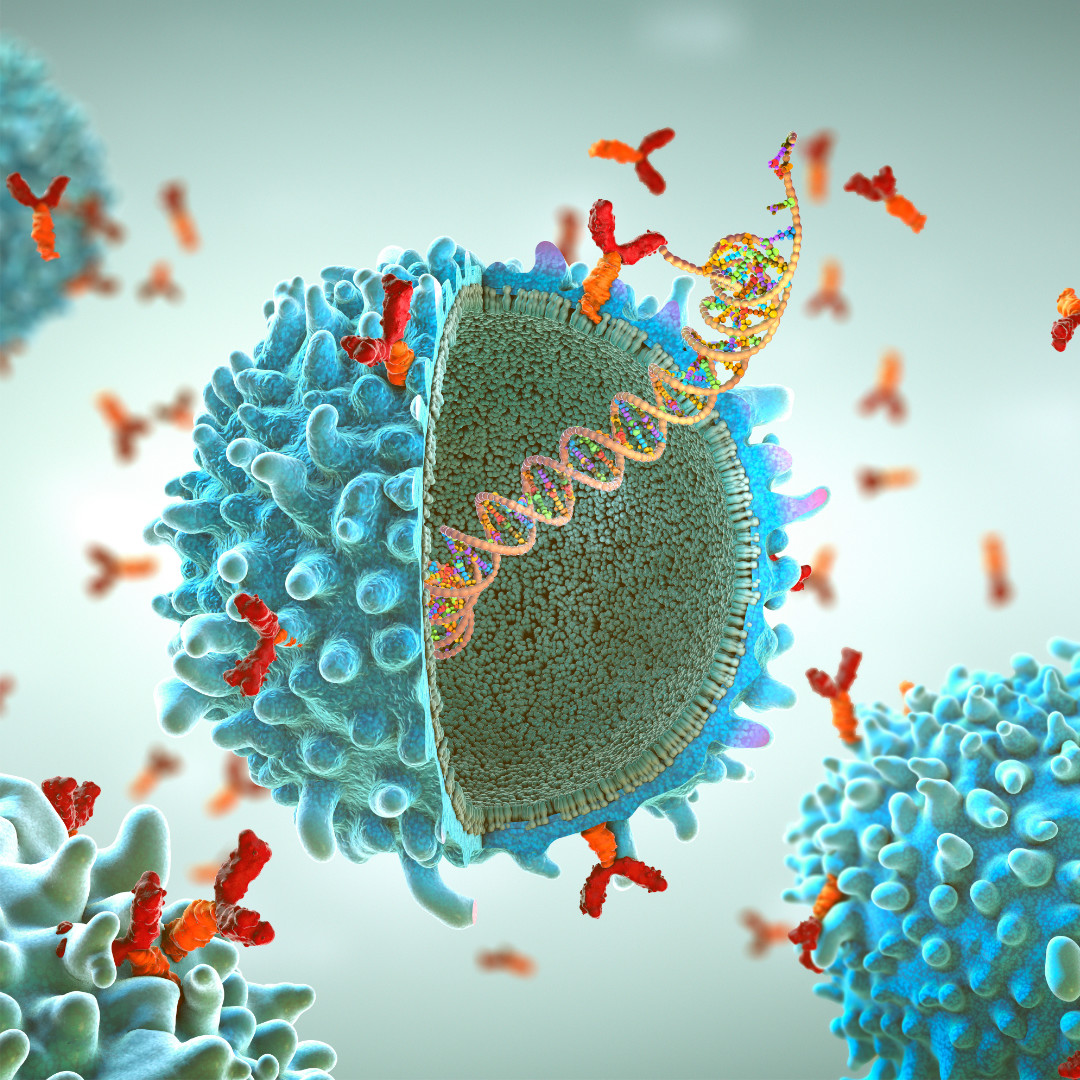
The technology behind this model is explained in more detail in the NANOSPRESSO Frontiers in Science article summary , including local hospital pharmacy production, nucleic acid therapeutics, lipid nanoparticles and cartridge-based microfluidics.
But Prof. Schiffelers did not present scale-down as an easy shortcut. His keynote also brought a reality check. A personalised production model has to work beyond the concept. It has to connect formulation science, preclinical performance, quality control, dosing, workflow and clinical use.
This is where NANOSPRESSO is now entering a demanding translational phase. The project has to test whether a small-scale production process can remain reliable, reproducible and practical in a hospital pharmacy setting. It also has to show that the resulting medicines can be characterised, controlled and trusted.
These questions do not weaken NANOSPRESSO. They make the project serious. Scale-down is not simply miniaturised manufacturing. It is a different way of organising nanomedicine production. For NANOSPRESSO, the challenge is to make personalised RNA/LNP medicines not only scientifically possible, but usable, trusted and relevant for patients.
ETPN2026 showed that personalised nucleic acid nanomedicine is no longer only a formulation question. It is also a clinical, regulatory and operational question.
For NANOSPRESSO, three messages stood out.
This discussion matters beyond NANOSPRESSO. Every advanced nanomedicine faces the same fundamental question: how do we turn complex technology into something patients, clinicians, pharmacists and regulators can actually use?
NANOSPRESSO will continue to drive this type of strategic discussion in future events and will share the next developments of the project soon. Stay tuned.
ETPN2026 was the 21st Annual Event of the European Technology Platform on Nanomedicine, hosted by RCSI University of Medicine and Health Sciences in Dublin from 17 to 19 June 2026. The event gathered participants from the European nanomedicine community and created a forum for scientific exchange, translational discussion, clinical perspectives and networking across academia, industry, healthcare and innovation stakeholders.
With sessions dedicated to clinical needs, scale-up, manufacturing, regulation, advanced drug delivery, regenerative medicine, emerging therapies and European projects, ETPN2026 provided a particularly relevant setting for NANOSPRESSO and its ambition to connect RNA/LNP science, decentralised manufacturing, regulatory science, clinical implementation and patient access.

NANOSPRESSO is funded by the Dutch Research Agenda (NWA) ORC 2020/21 program. For more information about our partners, funding, and legal notices, please visit our contact page and follow us on social media.